the Fall
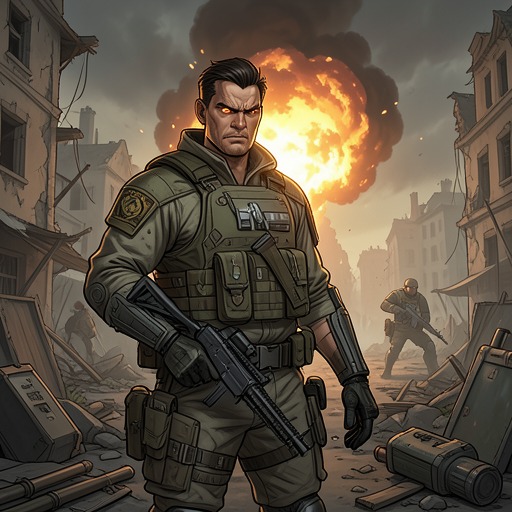
Tinea and Leah: [Cyberpunk, Alien Incursions, Murder and Mayhem, Girl's Love (WLW)]the Fall is the book’s foundational historical rupture: the disaster that separates the remembered old world from a present in which Antithesis incursions can overrun cities, infrastructure is improvised under pressure, and survival depends on both communities and samurai technology. Its decisive significance lies in the way it remains active after the catastrophe itself. The Fall is not merely background history; it is the temporal condition that makes every later emergency feel like a repetition, escalation, or possible return of the abyss.
A Historical Boundary
the Fall is invoked through a joke remembered as belonging to the world before the catastrophe: “Yesterday we stood above the abyss. Today we are one step ahead!” In its original context, the line becomes a hysterical response to immediate danger, but its force depends on the historical distance embedded in “before the Fall.” The past supplies the language of an abyss, while the present supplies the literal step: a person standing above a lethal drop, shaking, sweating, laughing, and finally moving forward. The remembered phrase therefore collapses historical catastrophe and private crisis into the same image of precarious survival.
The reference also establishes the Fall as a collective temporal marker rather than a precisely narrated event in these passages. People do not need to explain what it was when they invoke it; the name functions as shared cultural shorthand. Its presence is felt through comparison, memory, and damaged institutions. The book’s chronology is consequently layered: current events unfold in ordinary sequence, but their meaning is continually measured against the world that existed before the Fall.
The World It Left Behind
The continuing consequences of the Fall become visible during an Antithesis incursion at the outskirts of a suburb near New Montreal. Sirens spread across the neighborhood as Antithesis Drop-Pod Ropes crash down. One destroys several houses; another lands across the shopping strip, crushing ground cars and buses and blocking the entrance to the community shelter. The danger is not confined to combatants. Buses contain passengers, the cars probably contain passengers as well, and the blocked shelter turns a piece of emergency infrastructure into another obstacle. The scene makes the post-Fall world materially legible through damaged transport, threatened civilians, and insufficient protection at the exact point where safety is supposed to begin.
The catastrophe also produces a society in which emergency warning is integrated directly into perception and decision-making. A timer is restarted from the incursion warning, counting down in the corner of vision while the attack develops around the neighborhood. This technological mediation does not make the crisis abstract. The countdown sharpens bodily fear: the heart beats heavily, the hands become sweaty, and the recognition that people are being killed breaks through tactical calculation. The Fall’s legacy is thus both infrastructural and psychological, binding advanced augmentation to an experience of immediate vulnerability.
From Local Shock to Global Crisis
The later global Antithesis incursion reveals the scale at which the post-Fall world must operate. A map of North America displays red streaks centered on several megacities, showing hordes attacking population centers and becoming active simultaneously. Green icons spread through the same urban areas and into suburbs or dense concentrations of red, implying organized responses or protected positions within the assault. The visual presentation turns catastrophe into a continental pattern: what first appears as a local emergency is part of a synchronized attack on civilization’s major centers.
New Montreal illustrates the collective response. Antithesis hordes move through its streets in long, orderly rows, even following road rules, while older and stronger samurai destroy them by the thousands without stopping the flow. Temporary military bases are established to stem and funnel the tides back upon themselves, creating a cordon. The city therefore answers the incursion through layered containment rather than a single decisive victory. The Fall has left a civilization that can still coordinate force, but the scale of the enemy makes every success provisional.
A museum roof provides a concentrated image of that unequal struggle. A samurai-tech railgun emplacement blasts through waves of Model One units and occasional larger Model Eleven units, while a girl Vanguard fights land-bound single-digit models as they climb the walls and reach the roof. Her grenades, guns, and shoulder-mounted mini-railguns show how survival has become a matter of rapid technological adaptation. At the same time, the scene’s orphan-charity setting connects military emergency to civilian care: even a place intended for children and charity is absorbed into the defensive landscape created by the Fall’s aftermath.
Memory, Care, and Recovery
The Fall’s historical damage is also registered through bodies and relationships. One scene describes a girl in the guise of a woman who cannot stop crying because her missing voice prevents the release of an ordinary cry. Her broken keening overwhelms the person holding and petting her, who recognizes that years of exposure to injuries inflicted on males did not prepare them to confront the damage done to girls. The memory of the Fall therefore includes not only ruined cities and military threats but also social conditioning: survival has required people to normalize some forms of injury while treating others as sacred and nearly impossible to assimilate.
The book places this inherited numbness beside active care. Hugging, petting, staying beside the bed, and acknowledging the inadequacy of comfort become forms of resistance to the emotional logic produced by catastrophe. Recovery is not presented as a clean return to a pre-Fall condition. It proceeds through exposure, conversation, and repeated encounters with danger that end without total ruin. When Leah asks Tinea what is needed to keep control of her own behavior, Tinea identifies time, exposure to things going wrong and ending well anyway, and continued conversation. The answer gives the Fall a psychological afterlife: its violence persists as expectation, while healing requires accumulating experiences that contradict the expectation of inevitable disaster.
Enduring Narrative Significance
the Fall organizes the book’s contrast between ordinary continuity and emergency rupture. New Montreal can raise a substantial wall and maintain a surprisingly positive mood even during the global incursion; children can remain safe, communication can continue through the internet, and communities can monitor one another. Yet those forms of resilience exist because the world has already been broken. The wall, the shelter, the military cordon, the augmented timer, and the samurai defenses are not neutral conveniences. They are adaptations to a historical wound.
Its deepest narrative function is to make survival morally and emotionally cumulative. Each later crisis tests whether people will repeat the Fall’s patterns of helplessness, concealment, and bodily destruction or build forms of protection that include civilians, children, injured bodies, and damaged minds. The remembered abyss is never fully behind the characters. The book’s present is defined by taking one more step beyond it, knowing that the ground remains unstable and that the next incursion may make the old boundary feel immediate again.